Decoding AIS and 26AS: How to Avoid Tax Notice Due to Mismatch
In today’s digitized tax environment, filing your Income Tax Return (ITR) isn’t just about reporting your income—it’s about ensuring your data matches what’s already available with the Income Tax Department. Thanks to advanced data analytics and information-sharing networks, even a small mismatch between your ITR and your Form 26AS or AIS (Annual Information Statement) can trigger a tax notice.
Let’s break down why this happens and how you can stay protected.
Why Taxpayers Must Pay Attention to Form 26AS and AIS
With automation at the core of the Indian tax system, the government uses Form 26AS and AIS as its primary cross-verification tools to detect inconsistencies in returns.
Form 26AS
This is your consolidated annual tax statement. It reflects:
TDS/TCS deducted and deposited
Advance tax and self-assessment tax paid
Tax refunds issued
Certain high-value transactions
AIS (Annual Information Statement)
A much more detailed report than Form 26AS, AIS includes:
Interest from savings and fixed deposits
Dividend income
Stock and mutual fund transactions
Credit card payments
Foreign remittances
Property purchases and other specified transactions
Even minor gaps between your return and these statements can raise red flags—sometimes for as little as ₹500 in missing interest income!
What Causes a Mismatch—and Why You Might Still Get a Notice Even if You Think You Filed Everything Correctly
Here are the most common reasons clients receive notices despite believing they were fully compliant:
1. Missing Interest Income
It’s easy to forget the interest earned from fixed deposits, especially when banks deduct TDS. But even if tax is deducted, you must still report the income. Otherwise, adjustments may be made under Section 143(1)(a).
2. Nature of Income Doesn’t Match TDS Section
For example, if TDS is deducted under Section 194H (commission) or 194J (professional services), but you declare income under Section 44AD (presumptive income), the mismatch in income type can lead to scrutiny.
3. Capital Gains Left Unreported
AIS captures almost all equity, mutual fund, and bond transactions. If you fail to declare your gains (even inadvertently), it could signal underreporting.
4. Claiming TDS That’s Not in Form 26AS
If your claimed TDS isn’t reflected in Form 26AS, the system may disallow the credit or mark your return as defective.
5. Difference in Total Income Reported
If your total receipts reported in ITR differ from those in AIS, the department may treat this as underreporting, even if it’s due to a genuine mistake.
What Happens When There's a Mismatch?
Here’s how the Income Tax Department might respond:
Intimation Under Section 143(1)(a):
The system auto-adjusts your return and sends a notice if discrepancies are found. These often catch taxpayers off guard.
Scrutiny Assessment Under Section 143(2):
For larger mismatches, your return may be selected for detailed scrutiny, requiring additional documentation and justification.
Demand Notices:
If the mismatch leads to higher assessed income, a tax demand may be raised—sometimes unexpectedly.
Penalty Proceedings Under Section 270A:
Misreporting or underreporting of income can lead to penalties—and in rare cases, even legal consequences.
How I Help Clients Avoid These Issues
Before Filing:
Cross-verify income details with both Form 26AS and AIS.
Report all income—even if exempt or small (like ₹200 savings account interest).
Ensure correct income heads and choose the right ITR form.
Verify TDS claims match Form 26AS.
After Receiving a Notice:
Don’t panic. Download and read the notice carefully.
Compare your ITR with AIS and 26AS to locate the discrepancy.
If permitted, revise the return to correct the issue.
If revision isn’t possible, use the e-Proceedings portal to respond with clear explanations and supporting evidence.
Judicial Take on Mismatches
Courts and tax tribunals in India have ruled that Form 26AS and AIS are not conclusive evidence of income—but they are credible indicators that can initiate inquiry. If something appears in these statements, it’s your responsibility to provide a reasonable explanation—even if the amount isn’t taxable.
In the current compliance-driven ecosystem, Form 26AS and AIS are no longer passive reference tools. They are active enforcement mechanisms. Ignoring them can lead to:
Notices for defective returns
Selection for scrutiny assessments
Tax demands and penalty proceedings
So, don’t wait for a notice to learn about a mismatch. Make checking your AIS and Form 26AS a mandatory part of your ITR filing process. A 10-minute review can save you weeks of anxiety later.
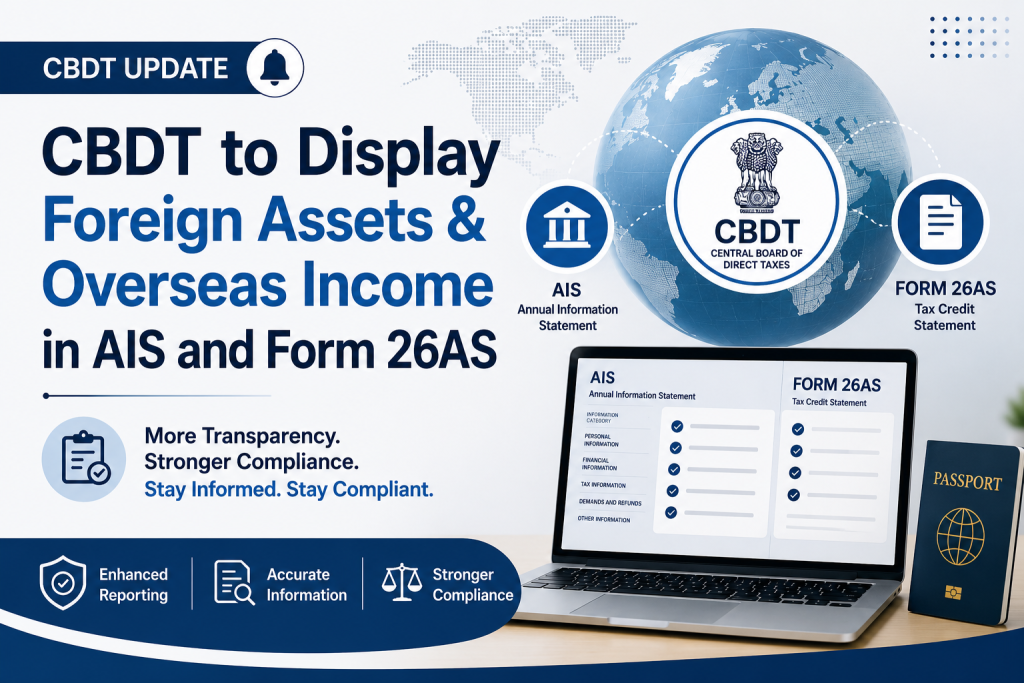
CBDT to Display Foreign Assets & Overseas Income in AIS and Form 26AS On 8 July 2026, the Central Board of Direct Taxes (CBDT) issued a landmark directive (Order F.No.…
ITR-1 vs ITR-2 vs ITR-4 for AY 2026-27: How to Choose the Right Income Tax Return Form Filing your Income Tax Return (ITR) begins with one critical decision—selecting the correct…
Who Qualifies as a Relative Under the Income-tax Act, 1961? The term "relative" may appear straightforward, but under the Income-tax Act, 1961, it does not have a single universal definition.…