Facing an Income Tax Notice? Here’s How to Judge the Real Risk
Receiving an Income Taxnotice often triggers instant stress for most taxpayers. However, the reality is more balanced: many notices are routine, system-generated, and easily resolved, while only a few categories require urgent attention due to their legal and financial implications.
Understanding the type, purpose, and seriousness of the notice helps you respond confidently and avoid unnecessary panic. This guide explains exactly when an Income Tax notice is harmless and when it signals a matter requiring immediate action.
Situations Where You Need Not Worry Much
These notices are typically procedural and can be closed smoothly with timely clarification or document submission.
1. Minor Mismatches in Form 26AS/TIS and the Filed Income Tax Return
Small differences in reported income, TDS, or financial transactions are common.
Illustration: You reported salary income of Rs. 12,00,000, but Form 26AS reflects Rs. 13,00,000 with higher TDS. The CPC sends a notice seeking clarification.
What to do: Determine the cause of mismatch.
If Form 26AS is correct: file a revised return.
If the mismatch is due to TDS reporting: upload the corrected Form 16 or file a rectification after your employer corrects the TDS return.
2. Intimation Under Section 143(1) with Small Adjustments
These arise mainly due to mismatches in deduction or exemption data.
Illustration: You claimed Rs. 25,000 under Section 80D, but the system allows only Rs. 20,000, causing a small difference in tax/refund.
What to do:
If your claim is correct: file a rectification and upload proof.
If incorrect: accept the adjustment.
3. Routine Verification of Deductions or Income Disclosed
The department may simply ask for proof of deductions such as 80C, 80D, or HRA.
Illustration: You claimed a large HRA exemption but did not upload rent receipts. A query is issued asking for proof.
What to do: Upload rent receipts and landlord PAN. Such cases usually close without escalating to scrutiny unless major discrepancies exist.
4. Request for Additional Documentation
Queries may be triggered by high-value transactions or compliance checks.
Illustration: You deposited more than Rs. 10 lakh in your bank account. The department requests the source of funds.
What to do: Upload bank statements and provide a clear explanation (savings, loans, business receipts, etc.).
Situations Where You Should Pay Immediate Attention
These notices involve deeper examination, significant mismatches, or potential tax exposure. Delayed or incorrect responses may lead to penalties, interest, or reassessment.
1. Notice Under Section 143(2) — Scrutiny Assessment
This is a serious notice requiring detailed information, documents, and explanations.
Illustration: Your turnover is reported as Rs. 80 lakh, but AIS shows bank credits of Rs. 1.2 crore. The Assessing Officer issues a scrutiny notice seeking:
books of accounts,
bank reconciliations,
expense proofs, and
explanations for discrepancies.
What to do: Submit a comprehensive and timely response. Non-compliance may lead to best-judgment assessment and penalties.
2. Intimation Under Section 143(1) with a Large Variation or Tax Demand
If the system disallows major deductions or flags major mismatches, the resulting tax demand must be handled urgently.
Illustration: Your entire 80C/80D claim is disallowed, raising a demand of Rs. 1,25,000.
What to do: Review reasons, provide supporting evidence, and file a rectification or appeal as appropriate.
3. Notices for Non-Filing of Income Tax Return
Issued when the system detects taxable transactions but no return is filed.
Illustration: You sold shares worth Rs. 25 lakh and assumed gains were exempt. A notice asks why no ITR was filed.
What to do: File the pending return immediately with an explanation. Ignoring such notices may result in penalties or, in extreme cases, prosecution.
4. Reassessment Notice Under Section 148
This is among the most serious notices, issued when income is believed to have escaped assessment.
Illustration: Information received shows you purchased property worth Rs. 80 lakh, but related income was not reported. A notice u/s 148 is issued reopening your assessment.
What to do: File a return in response to the notice and furnish explanations and documentation requested.
Not every Income Tax notice is a cause for alarm. Routine mismatches, document requests, and system-generated alerts are generally easy to resolve with timely action.
However, scrutiny notices, large mismatches, non-filing alerts, or reassessment proceedings require immediate and careful attention to avoid:
penalties,
interest,
prolonged scrutiny, or
prosecution (rare but possible in serious non-compliance).
Approach each notice objectively, understand its intent, and respond within the deadline. Timely compliance ensures smooth resolution and stress-free tax management.
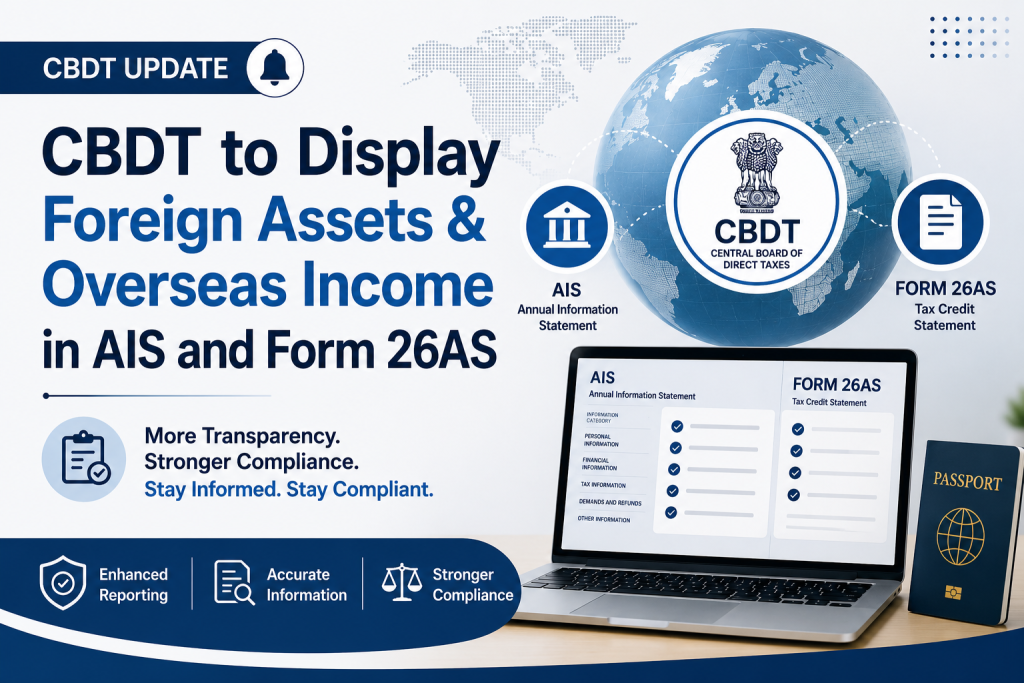
CBDT to Display Foreign Assets & Overseas Income in AIS and Form 26AS On 8 July 2026, the Central Board of Direct Taxes (CBDT) issued a landmark directive (Order F.No.…
ITR-1 vs ITR-2 vs ITR-4 for AY 2026-27: How to Choose the Right Income Tax Return Form Filing your Income Tax Return (ITR) begins with one critical decision—selecting the correct…
Who Qualifies as a Relative Under the Income-tax Act, 1961? The term "relative" may appear straightforward, but under the Income-tax Act, 1961, it does not have a single universal definition.…