New Tax Regime Deductions for FY 2025-26: What's In, What's Out, and Who Should Opt In
As we step into Financial Year 2025-26 (Assessment Year 2026-27), taxpayers continue to weigh the pros and cons of the old vs. new tax regimes. Introduced as a simplified alternative, the new tax regime offers lower tax rates in exchange for fewer deductions and exemptions. However, with recent enhancements announced in Union Budget 2025, the new regime has become a compelling option for many.
The Philosophy Behind the New Tax Regime
The new regime is designed with three goals in mind:
Simplicity in compliance
Lower tax rates
Reduced reliance on tax-saving investments and expenses
It suits individuals who prefer not to invest time or money into tax planningstrategies involving ELSS, PPF, insurance, etc.
Major Updates Under New Tax Regime for FY 2025-26
1. Higher Basic Exemption Limit
The basic exemption limit under the new regime has been increased, allowing more income to be entirely tax-free. This change ensures better tax savings at lower income levels.
2. Enhanced Section 87A Rebate
A major upgrade! Taxpayers with net taxable income up to ₹12 lakh under the new regime can now avail the enhanced Section 87A rebate, reducing their tax liability to zero.
3. Standard Deduction Boost for Salaried and Pensioners
The standard deduction has been increased to ₹75,000, providing a direct reduction in taxable income. With this, individuals with salary or pension income up to ₹12.75 lakh (₹12 lakh rebate + ₹75,000 deduction) may pay no income tax at all.
Deductions Still Allowed in the New Tax Regime
Though the new regime eliminates several popular deductions, it retains a select few:
✅ Standard Deduction (₹75,000)
Applicable to salaried individuals and pensioners.
✅ Employer’s Contribution to NPS – Section 80CCD(2)
Up to 14% of basic salary (for central government employees)
Up to 10% for other employees
Often underutilized, but a valuable deduction.
✅ Agniveer Corpus Fund – Section 80CCH
Contributions made by Agniveers under the Agnipath scheme remain deductible.
✅ Transport Allowance (for Differently-Abled Employees)
Specific exemptions continue for differently-abled employees.
✅ Other Allowances & Exemptions:
Conveyance Allowance (for duty-related expenses)
Travel Allowance (for tours/transfers)
Daily Allowance (for duty-related expenses away from base location)
✅ Voluntary Retirement Benefits – Section 10(10C)
Exemption up to a specified limit on amounts received under VRS.
The new tax regime for FY 2025-26 is now more favorable than ever—especially for individuals in the low to middle-income brackets. With higher exemption limits, a generous rebate, and increased standard deduction, it offers a tax-free window for many.
However, the best choice depends on your personal financial profile. Before locking in your selection for the year, make sure to:
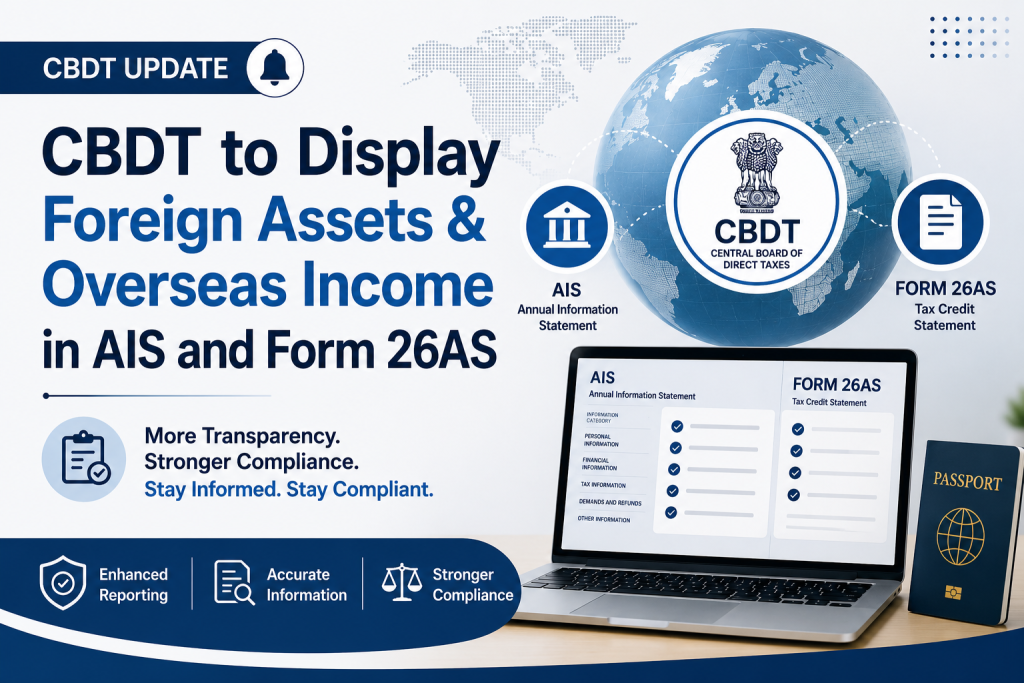
CBDT to Display Foreign Assets & Overseas Income in AIS and Form 26AS On 8 July 2026, the Central Board of Direct Taxes (CBDT) issued a landmark directive (Order F.No.…
ITR-1 vs ITR-2 vs ITR-4 for AY 2026-27: How to Choose the Right Income Tax Return Form Filing your Income Tax Return (ITR) begins with one critical decision—selecting the correct…
Who Qualifies as a Relative Under the Income-tax Act, 1961? The term "relative" may appear straightforward, but under the Income-tax Act, 1961, it does not have a single universal definition.…