

Do You Need an Income-Tax Clearance Certificate (ITCC) for Travel? CBDT Clarifies

Do You Need an Income Tax Clearance Certificate (ITCC) for Travel? CBDT Clarifies

Recent amendments to the Income-tax Act, 1961, have sparked confusion among Indian citizens regarding the need for an income-tax clearance certificate (ITCC) before travelling abroad. However, the Central Board of Direct Taxes (CBDT) has stepped in to clarify the situation: not all Indian citizens are required to obtain an ITCC for international travel.

Understanding the Recent Amendments

The confusion arose following amendments introduced by the Finance (No. 2) Act, 2024, to Section 230(1A) of the Income-tax Act, 1961. According to the Ministry of Finance, these amendments were misinterpreted, leading to widespread misinformation. The amendments primarily incorporate references to the Black Money (Undisclosed Foreign Income and Assets) and Imposition of Tax Act, 2015 (commonly known as the ‘Black Money Act’).

CBDT's Clarification

The amendment does not introduce a new requirement for all citizens to obtain an ITCC before leaving the country. Instead, it ensures that liabilities under the Black Money Act are treated similarly to those under the Income-tax Act, 1961, for the purposes of Section 230(1A).

Who Needs an ITCC?

The CBDT has emphasized that the requirement to obtain an ITCC is not a blanket rule but is reserved for specific scenarios involving significant financial issues. Here’s when an ITCC might be required.

  1. Serious Financial Irregularities: If an individual is involved in significant financial problems that necessitate their presence for investigations, they may be required to obtain an ITCC.

  2. Large Unpaid Tax Arrears: If a person owes more than ₹10 lakh in taxes, and these taxes have not been stayed by any authority, an ITCC will be required before they can leave the country.

This regulation has been in place since 2003, and the recent amendment has not changed this status quo.

Process of Obtaining an ITCC

If you fall under the categories mentioned above, the process to obtain an ITCC involves recording specific reasons for the requirement and obtaining approval from the Principal Chief Commissioner of Income or Chief Commissioner of Income Tax. This ensures that the process is not arbitrary and is applied only in necessary cases.

In summary, the CBDT has clarified that the requirement for an ITCC is not universal. It applies only to individuals facing serious financial issues or those with significant unpaid taxes. The recent amendments to Section 230(1A) of the Income-tax Act, 1961, do not introduce any new requirements for the general public but merely extend existing provisions to cover liabilities under the Black Money Act.

So, if you’re planning to travel abroad and are concerned about whether you need an ITCC, rest assured that this requirement is reserved for exceptional cases.

Related Post

image

GST Registration in India: Who Needs It, Who Doesn’t, and How to Avoid Costly Mistakes

GST Registration in India: Who Needs It, Who Doesn't, and How to Avoid Costly Mistakes One of the most common questions business owners ask is: Do I need GST registration?…

image

GSTR-1 vs GSTR-3B Mismatch Notices: A Practical Guide for Startups and SMEs

GSTR-1 vs GSTR-3B Mismatch Notices: A Practical Guide for Startups and SMEs Understanding GST Mismatch Notices and How to Respond Effectively Over the last few years, GST authorities have increasingly…

image

Section 43B(h) and MSME Payments: A Complete Guide for Businesses

Section 43B(h) and MSME Payments: A Complete Guide for Businesses The introduction of Section 43B(h) by the Finance Act, 2023 has significantly altered the tax treatment of payments made to…


Book A One To One Consultation Now
For FREE

How can we help? *

Maximizing Tax Benefits on Home Loans: What You Should Know

Maximizing Tax Benefits on Home Loans: What You Should Know

Owning a home is a cherished dream for many, and home loans play a pivotal role in making this dream a reality. To encourage homeownership, the Indian government offers various tax deductions under the Income Tax Act of 1961 on the repayment of home loans. While home loans can be expensive, understanding the tax benefits available can help you maximize your savings. Here’s everything you need to know about income tax benefits on home loans.

Section 24 – Deduction for Interest Paid on Home Loan

Under Section 24 of the Income Tax Act, you can claim a tax deduction on the interest portion of your home loan EMI if the loan is taken for the construction or purchase of a house. For loans taken for house construction, the construction must be completed within five years from the date of loan approval. You can claim a maximum deduction of up to Rs. 2 lakh per year.

If the construction exceeds the five-year limit, the deduction on interest is capped at Rs. 30,000 per financial year. For let-out properties, there is no upper limit on the tax exemption for interest, meaning you can claim the entire interest paid.

Section 80C – Deduction on Principal Repayment

Section 80C allows a deduction on the principal portion of your home loan EMI, up to a maximum of Rs. 1.5 lakh per year. However, to claim this deduction, the property must not be sold within five years of possession. If you sell the property before this period, the deductions claimed will be added back to your income in the year of sale.

Deduction on Interest Paid During the Pre-Construction Period

If you are paying EMIs on a property that is still under construction, you may be eligible to claim a deduction on the interest paid during this period. Once the construction is complete, or if you have purchased a fully constructed property, you can claim this deduction.

The Income Tax Act allows you to claim a deduction for pre-construction interest in five equal installments, starting from the year the property is acquired or construction is completed. This deduction is capped at Rs. 2 lakh. Additionally, if your home loan qualifies under Section 80EEA, you can claim an additional deduction of Rs. 1.5 lakh over and above the Rs. 2 lakh limit under Section 24(b).

Deduction for Registration and Stamp Duty Charges

You can also claim a deduction for registration and stamp duty charges under Section 80C, with the amount capped at Rs. 1.5 lakh. However, this deduction can only be claimed in the year these expenses are incurred.

Section 80EE and 80EEA – Additional Deductions

Sections 80EE and 80EEA provide additional deductions for homebuyers, up to a maximum of Rs. 50,000 under Section 80EE, and Rs. 1.5 lakh under Section 80EEA, subject to certain conditions. To claim these deductions:

  1. The loan amount must be Rs. 35 lakh or less.
  2. The property value should be Rs. 50 lakh or less.
  3. The individual should not own any residential house property on the date of loan sanction.

Section 80EEA, introduced in Budget 2019, was designed to boost the housing sector. To qualify, the stamp duty value of the property must be Rs. 45 lakh or less, and you must not own any other residential property at the time of loan sanction. It’s important to note that you cannot claim deductions under both Section 80EE and 80EEA simultaneously.

Joint Home Loan Deduction

Taking a joint home loan with immediate family members, such as parents, siblings, or a spouse, allows each loan holder to claim individual deductions. For home loan interest, each co-borrower can claim a deduction of up to Rs. 2 lakh under Section 24(b). Similarly, under Section 80C, each can claim up to Rs. 1.5 lakh for principal repayment. Additionally, joint holders may also qualify for deductions under Section 80EEA, up to Rs. 1.5 lakh each, provided all other conditions are met.

Tax Benefits and the New Tax Regime

It’s crucial to note that these tax benefits are not available under the new tax regime. If you opt for the new tax regime, deductions for interest on self-occupied house property (Section 24(b)), as well as deductions under Sections 80C, 80EE, and 80EEA, are not permitted. However, for let-out properties, you can still claim a deduction under Section 24(b), but only up to the taxable amount of rent after accounting for a 30% standard deduction.

Home loans offer significant tax benefits, particularly under the old tax regime. By carefully leveraging these deductions, you can enhance your savings and improve your financial planning. Understanding the various provisions can help you make the most of your home loan and ensure that your investment in property is financially rewarding.

Related Post

image

GST Registration in India: Who Needs It, Who Doesn’t, and How to Avoid Costly Mistakes

GST Registration in India: Who Needs It, Who Doesn't, and How to Avoid Costly Mistakes One of the most common questions business owners ask is: Do I need GST registration?…
image

GSTR-1 vs GSTR-3B Mismatch Notices: A Practical Guide for Startups and SMEs

GSTR-1 vs GSTR-3B Mismatch Notices: A Practical Guide for Startups and SMEs Understanding GST Mismatch Notices and How to Respond Effectively Over the last few years, GST authorities have increasingly…
image

Section 43B(h) and MSME Payments: A Complete Guide for Businesses

Section 43B(h) and MSME Payments: A Complete Guide for Businesses The introduction of Section 43B(h) by the Finance Act, 2023 has significantly altered the tax treatment of payments made to…

Book A One To One Consultation Now
For FREE

How can we help? *

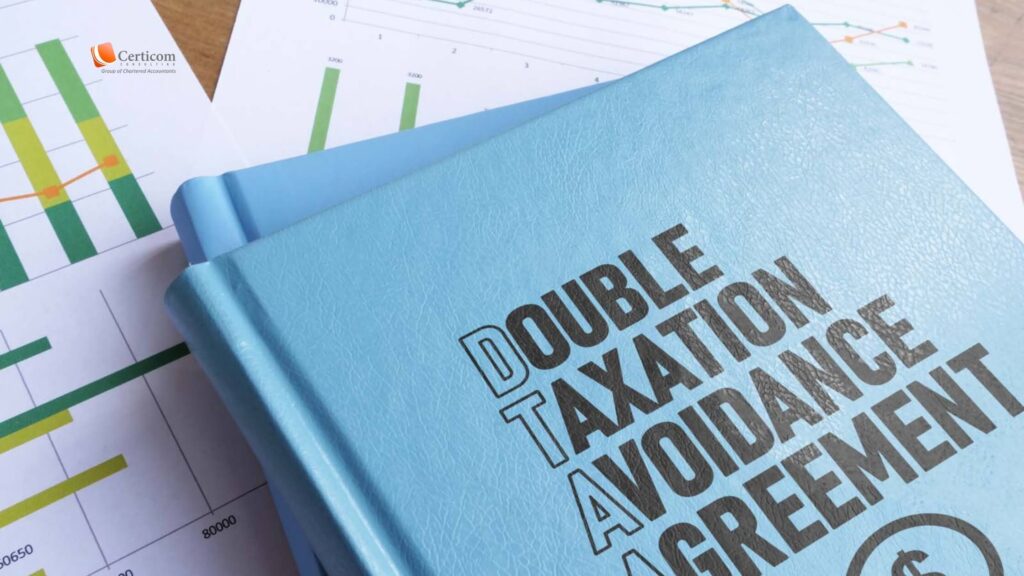
Understanding the Double Taxation Avoidance Agreement (DTAA)

Understanding the Double Taxation Avoidance Agreement (DTAA)

The Double Taxation Avoidance Agreement (DTAA) is a crucial bilateral accord between countries, designed to prevent taxpayers from being taxed on the same income in both their resident and source countries. In today’s globalized economy, where individuals and businesses often earn income from multiple countries, DTAA plays a significant role. It primarily benefits Non-Resident Indians (NRIs) and Persons of Indian Origin (PIOs) who might otherwise be subject to double taxation. The agreement allows taxpayers to choose the most favorable tax regime, whether under DTAA provisions or domestic tax laws, ensuring lower tax rates for certain transactions and offering mechanisms like Foreign Tax Credit to reclaim excess taxes paid abroad.

India has established DTAAs with 94 countries, promoting international trade and investment by minimizing tax evasion and encouraging economic cooperation. Different models, such as the OECD, UN, US, and ANDEAN models, provide various frameworks for these agreements, balancing taxation rights between resident and source countries. Additionally, specific forms are required to claim DTAA benefits, ensuring transparency and compliance. Methods like Full Exemption and Foreign Tax Credit are used to eliminate double taxation, thereby facilitating cross-border economic activities.

Double Taxation Avoidance Agreement

DTAA is a financial agreement between the governments of two countries to prevent the double taxation of income earned by a taxpayer. This mechanism was introduced to avoid income being taxed twice—once in the home country (the taxpayer’s country of residence) and again in the host or source country (where the income is generated). This situation is commonly faced by NRIs and PIOs.

Objectives of DTAA

  1. Relief from Double Taxation: DTAA provides relief to taxpayers by mitigating the burden of double taxation.
  2. Encouraging International Trade and Investment: By preventing double taxation, DTAA fosters international economic activity.
  3. Promoting Economic Relations: DTAA helps in developing stronger economic ties between countries.
  4. Minimizing Tax Evasion: By clearly defining tax liabilities, DTAA reduces opportunities for tax evasion.

The Need for DTAA

In a globalized world, with modern technology making international markets more accessible, taxpayers often generate revenue from various sources worldwide. Without DTAA, income arising from international transactions could be taxed both in the taxpayer’s resident country and the source country, leading to a heavy tax burden. For instance, capital gains might be tax-exempt in countries like New Zealand, Hong Kong, Singapore, and Switzerland, while in India, such gains are taxable under the Income Tax Act, 1961. DTAA ensures that taxpayers are not unfairly taxed on the same income in multiple countries.

Features of DTAA

  • Override of Domestic Laws: According to Section 90(2) of the Income Tax Act, 1961, DTAA provisions can override domestic tax laws if they are more beneficial to the taxpayer.
  • Choice of Tax Regime: Taxpayers can choose to be taxed under DTAA provisions or domestic tax laws, whichever is more beneficial.
  • Lower TDS Rates: DTAA often provides for lower rates of Tax Deducted at Source (TDS) on certain types of income. For example, dividend income may be taxed at a lower rate under DTAA compared to domestic laws.
  • Foreign Tax Credit: Taxpayers can reclaim excess taxes paid abroad through mechanisms like Foreign Tax Credit, as outlined in Rule 128 of the Income Tax Rules, 1962, using Form No. 67.
  • Countries with DTAA: India has signed DTAA agreements with 94 countries. For countries without such agreements, taxpayers can claim limited benefits under Section 91 of the Income Tax Act, 1961.

DTAA Models

Different DTAA models have been developed to ensure consistency and comprehensiveness in tax treaties between nations:

    • OECD Model: Developed by the Organisation for Economic Co-operation and Development, this model is favored by developed countries and emphasizes the right of the country of residence to impose tax.
    • UN Model: The United Nations Model is used primarily by developed and developing countries. It gives more weight to the “Source” principle, meaning the country where the income is generated has a greater right to tax it. Most of India’s treaties are based on the UN Model.
    • US Model: This model differs significantly from the OECD and UN models and is specifically designed by the United States.
    • ANDEAN Model: Favored by underdeveloped countries like Bolivia and Colombia, this model supports taxation in the source country.

Forms Under DTAA

To claim benefits under DTAA, taxpayers must submit specific forms:

  1. Form No. 10FA: Application for a certificate of residence for the purposes of Section 90 and 90A of the Income Tax Act, 1961.
  2. Form No. 10F: Provides details such as the assessee’s status, PAN, nationality, etc.
  3. Form No. 10FB: Certificate of residence issued by the government after the submission of Form No. 10FA.
  4. Form No. 67: Statement of income earned from a country outside India and Foreign Tax Credit.

Methods of Eliminating Double Taxation

  • Full Exemption Method: Under this method, foreign income is completely excluded when calculating the resident country’s taxable income.
  • Exemption with Progression: While foreign income is exempted, it is still included for determining the applicable tax rate, ensuring that higher foreign income results in a higher tax rate.
  • Foreign Tax Credit: Taxpayers can claim credit for taxes paid in the source country, reducing their tax liability in the resident country. However, the credit is only available for tax, surcharge, and cess, not for penalties or interest. Tax credit can only be claimed if the tax is not disputed.

DTAA is a vital tool for managing the complexities of international taxation, ensuring that taxpayers do not face the undue burden of being taxed on the same income twice, and promoting economic cooperation between nations.

Related Post

image

GST Registration in India: Who Needs It, Who Doesn’t, and How to Avoid Costly Mistakes

GST Registration in India: Who Needs It, Who Doesn't, and How to Avoid Costly Mistakes One of the most common questions business owners ask is: Do I need GST registration?…
image

GSTR-1 vs GSTR-3B Mismatch Notices: A Practical Guide for Startups and SMEs

GSTR-1 vs GSTR-3B Mismatch Notices: A Practical Guide for Startups and SMEs Understanding GST Mismatch Notices and How to Respond Effectively Over the last few years, GST authorities have increasingly…
image

Section 43B(h) and MSME Payments: A Complete Guide for Businesses

Section 43B(h) and MSME Payments: A Complete Guide for Businesses The introduction of Section 43B(h) by the Finance Act, 2023 has significantly altered the tax treatment of payments made to…

Book A One To One Consultation Now
For FREE

How can we help? *