• Call us: +91 831 748 8035
  • Email:[email protected]
  • Have any questions?
Get An Appointment
Certicom
  • Home
  • About
  • Our Services
    • Account Services
    • Audit & Assurance
    • Taxation Services
      • Indirect Tax Services
      • Direct Tax Services
    • Business Consultants
    • International Taxation
    • IT Return Filing Service
    • Retainership
    • ROC Filing
  • CORPORATE SERVICES
    • Company Registration
    • Payroll Outsourcing
    • Secretarial Services
    • Private Limited Company
    • Limited Liability Partnership
    • Startup Services
    • Trademark Registration
  • NetSuite Consulting Service
  • Blogs
  • Contact
  • Home
  • About
  • Our Services
    • Account Services
    • Audit & Assurance
    • Taxation Services
      • Indirect Tax Services
      • Direct Tax Services
    • Business Consultants
    • International Taxation
    • IT Return Filing Service
    • Retainership
    • ROC Filing
  • CORPORATE SERVICES
    • Company Registration
    • Payroll Outsourcing
    • Secretarial Services
    • Private Limited Company
    • Limited Liability Partnership
    • Startup Services
    • Trademark Registration
  • NetSuite Consulting Service
  • Blogs
  • Contact

Types of GST Assessments: A Quick Guide

  • 13 Oct 2025
  • sneha
  • GST
  • Comments Off on Types of GST Assessments: A Quick Guide
Assessment

Types of GST Assessments: A Quick Guide

Assessment

The Goods and Services Tax (GST) framework in India operates on the principle of self-assessment and periodic filing of returns. Every registered taxpayer is required to file returns monthly or quarterly, declaring outward supplies, inward supplies, and tax payable. However, the process doesn’t end with filing — the tax authorities are empowered to verify, scrutinize, and assess these returns to ensure accuracy and compliance.

The Central Board of Indirect Taxes and Customs (CBIC) and its officers are authorized to assess returns, verify the correctness of tax paid, and recover any shortfall. These assessments are governed by specific provisions under the Central GST Act, 2017 and corresponding State GST Acts. Let’s understand the various types of assessments under the GST law.

1. Self-Assessment – Section 59

Under the GST regime, every registered taxpayer is required to self-assess their tax liability based on the returns filed. This includes determining output tax, input tax credit (ITC) eligibility, and the net tax payable.

If the tax paid and returns filed are found to be correct, the process ends there. However, if discrepancies are detected later during scrutiny or audit, corrective actions can be initiated by the department.

In short, self-assessment is the foundation of the GST compliance system, where the taxpayer shoulders the responsibility for accurate reporting and timely payment.

Assessment

2. Provisional Assessment – Section 60

When a taxpayer is unable to determine the correct tax rate or the value of goods or services, they may opt for Provisional Assessment.

The process involves:

  • Submitting a request in FORM GST ASMT-01 to the proper officer.

  • The officer may seek additional details via FORM GST ASMT-02 and issue an order within 90 days.

  • The taxpayer must furnish a bond in FORM GST ASMT-05 along with security (not exceeding 25% of the bond value) to cover possible tax differentials.

After the initial order, the officer is required to finalize the assessment within six months by issuing an order in FORM GST ASMT-06.

Once finalized, the taxpayer can seek release of the security using FORM GST ASMT-08. Interest on delayed payments or refunds also applies in such cases.

3. Scrutiny Assessment – Section 61

A Scrutiny Assessment is conducted when the proper officer examines the returns filed to ensure accuracy.

The process follows these steps:

  • If discrepancies are found, the officer issues a notice in FORM GST ASMT-10.

  • The taxpayer must respond with explanations or documents in FORM GST ASMT-11 within 30 days.

  • If the officer is satisfied, the closure order is issued in FORM GST ASMT-12.

If the reply is unsatisfactory, the officer may proceed with further actions such as:

  • Departmental Audit (Section 65)

  • Summary Assessment (Section 64)

  • Search and Seizure (Section 67)

  • Demand Proceedings (Sections 73/74/74A)

While Section 61 itself doesn’t specify a limitation period, the time limits prescribed under the subsequent sections apply to any further proceedings initiated.

4. Summary Assessment – Section 64

A Summary Assessment is a protective measure invoked in urgent cases to safeguard government revenue.

It may be conducted when:

  • The officer has sufficient grounds to believe that delaying the assessment would harm revenue interests.

  • Prior approval is obtained from the Additional or Joint Commissioner.

The order is issued in FORM GST ASMT-16, along with a summary of tax payable in FORM GST DRC-07.

If the taxpayer believes the assessment was erroneous, they may apply for withdrawal of the order within 30 days using FORM GST ASMT-17. The Additional/Joint Commissioner can also withdraw it suo motu if found incorrect, after which normal proceedings under Sections 73/74/74A will follow.

5. Assessment of Non-Filers – Section 62

When a registered taxpayer fails to file returns, even after being served a notice, the officer can conduct a Best Judgment Assessment based on available information.

Key points:

  • The order is passed in FORM GST ASMT-13, along with tax summary in FORM GST DRC-07.

  • If the taxpayer files the pending returns within 60 days, the order stands withdrawn automatically.

  • A further 60-day extension may be granted with additional late fees of ₹100 per day (per Act).

  • Such assessment can be made within five years from the due date of the Annual Return under Section 44.

Assessment

6. Assessment of Unregistered Persons – Section 63

When a registered taxpayer fails to file returns, even after being served a notice, the officer can conduct a Best Judgment Assessment based on available information.

Key points:

  • The order is passed in FORM GST ASMT-13, along with tax summary in FORM GST DRC-07.

  • If the taxpayer files the pending returns within 60 days, the order stands withdrawn automatically.

  • A further 60-day extension may be granted with additional late fees of ₹100 per day (per Act).

  • Such assessment can be made within five years from the due date of the Annual Return under Section 44.

Read More: TDS Credit Anomalies Under the New Income Tax Act: Why Taxpayers Are Still Paying Twice

Conclusion

The GST assessment framework ensures that tax compliance is maintained transparently and fairly. While self-assessment promotes trust and efficiency, scrutiny and provisional assessments serve as checks to verify correctness. Provisions like summary assessment and best judgment assessment empower authorities to act swiftly in revenue-sensitive cases.

In essence, the finality of filed returns is achieved only after the statutory assessment cycle concludes or the prescribed scrutiny period expires.

Related Post

image

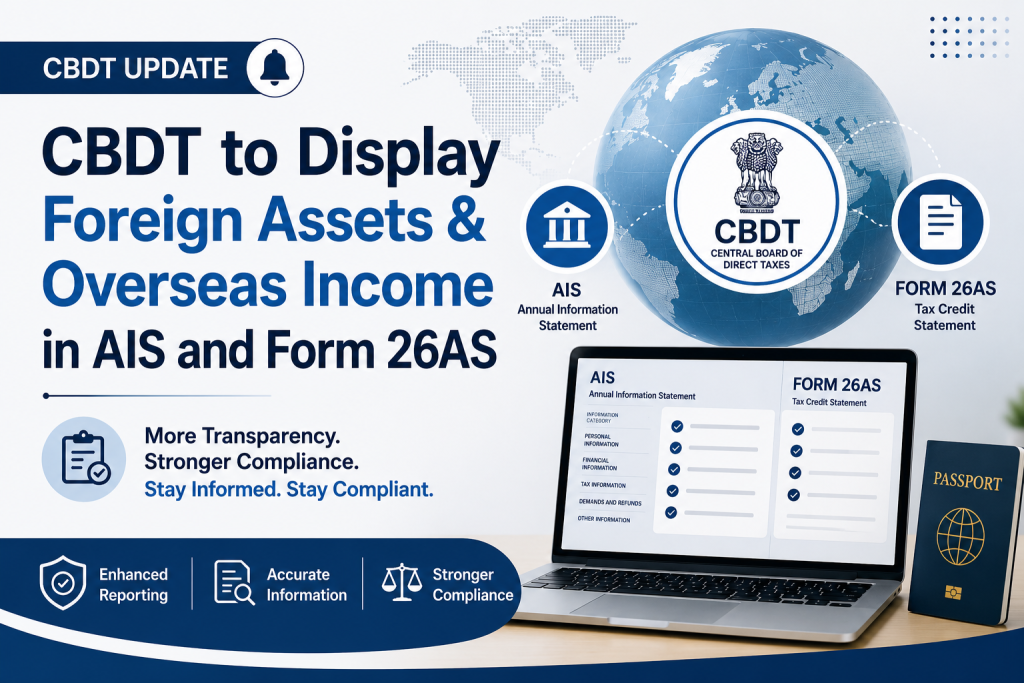
CBDT to Display Foreign Assets & Overseas Income in AIS and Form 26AS

CBDT to Display Foreign Assets & Overseas Income in AIS and Form 26AS On 8 July 2026, the Central Board of Direct Taxes (CBDT) issued a landmark directive (Order F.No.…
Read More
image

ITR-1 vs ITR-2 vs ITR-4 for AY 2026-27: How to Choose the Right Income Tax Return Form

ITR-1 vs ITR-2 vs ITR-4 for AY 2026-27: How to Choose the Right Income Tax Return Form Filing your Income Tax Return (ITR) begins with one critical decision—selecting the correct…
Read More
image

Who Qualifies as a Relative Under the Income-tax Act, 1961?

Who Qualifies as a Relative Under the Income-tax Act, 1961? The term "relative" may appear straightforward, but under the Income-tax Act, 1961, it does not have a single universal definition.…
Read More

Book A One To One Consultation Now
For FREE

How can we help? *

CBIC looks for public feedback to check GST avoidance by e-tailers

  • 20 Aug 2019
  • jins
  • Tax Update
  • Comments Off on CBIC looks for public feedback to check GST avoidance by e-tailers

Before considering Customs laws, the Central Board of Indirect Taxes and Customs (CBIC) is looking for public input on checking duty and GST evasion allegedly by ecommerce companies situated outside the nation.

The CBIC is searching for tech-empowered solutions to guarantee duties are paid effectively and to make imports through express messenger consistent, as indicated by custom authorities and others in the know of the matter.

The arrangement should enable clients to get deliveries quicker and free up from red tape those courier services and abroad ecommerce business firms that are happy to do business legitimately, an authority said on the state of anonymity. “We’re available to suggestions, including changing laws to present a flat rate of duty and GST for courier imports, yet the system should be consistent,” said a senior Customs official.

The CBIC has asked community platform LocalCircles to gather the input. In fact, there were 340 remarks from people and other community individuals in response to a blog post by LocalCircles on the issue. The proposals included compulsory registration of all overseas ecommerce substances in India and information captured at single source inside the CBIC. A flat rate on imports through express courier and denying overseas ecommerce business transactions from being named as B2B transactions through local partners, were different recommendations.

The government has effectively looked for suggestions internally on how to curb duty avoidance, another senior Customs authority told ET. A system to deduct customs duty and GST when consumers pay could be one solution to stop avoidance, he said.

The government has taken action against ecommerce business imports named as duty free ‘gifts and samples’. It has blocked clearance of every single such parcels at express courier ports in Mumbai, Delhi and Bengaluru. After the move, these ports have seen an intense decrease in the number of incoming gifts, yet other ports keep on clearing such gifts.

Our strategies for duty avoidance, as well, have been flagged.

In June, customs authorities in Mumbai seized more than 500 huge consignments of Chinese ecommerce firm Shein and sealed a distribution center of its Indian reseller Sino India Etail for underestimating goods imported through the low-value(under Rs 1 lakh) consignment route. Sino India Etail was only one of a dozen or so firms against which action had been taken. The company fits in with local laws and pays taxes correctly and on time, it said already.

Imports already make up around 7-8% of India’s overall ecommerce market by worth and are growing quicker than the general market pace, an expert following the ecommerce business segment at one of the Big Four consulting company said.

Despite the fact that Amazon.com is a sizeable player in ecommerce business imports, a critical bit of such imports is by Chinese ecommerce based business firms that purposely evade taxes and duties.

Contact Certicom Consulting for any further queries

Two traders captured for Rs 50 crore IGST refund fraud

  • 15 Jul 2019
  • jins
  • GST Updates
  • Comments Off on Two traders captured for Rs 50 crore IGST refund fraud

The Belapur Central GST Commissionerate captured two traders for allegedly floating more than 50 shell companies to deceitfully to benefit IGST refunds after GST council as of late issued rules to control refund related frauds, people in the know told ET..

Sources said Ajay Gopinath Mishra and Ramesh Chandra Bhatt profited IGST refund by indicating fare of textile goods over Rs 350 crore and gathered IGST refund of over Rs 50 crore between January and May. The said amount was discounted by the traditions to these exporters at the port of export.

“The IGST was paid utilizing input tax credit (ITC) which has been observed to be deceitful,” said one of the authorities.

An authority clarified that non-existent providers issued invoices for going of the ITC used for payment of IGST on exported goods and IGST refund is guaranteed. These organizations were made by utilizing the PAN and Aadhar Cards of different un-suspecting people through whom GST refunds were being claimed.

“For this situation as well, the Belapur Commissionerate authorities uncovered a syndicate of more than 50 organizations, for example, H.A. Creation, A.S. Fashion, Ritiesh Creations, R.D. Creation, Bamane Enterprises were drifted to falsely get advantages of IGST refunds,” revealed the authority. “Nobody has really paid the IGST on which ITC was benefited by the exporter.”

During investigation, a source stated, the bank accounts declared to the department at the time of getting GST registration certificate were supposedly not quite the same as the bank account declared to the Customs specialists with the end goal of IGST refund. The probe additionally uncovered that while a large portion of the suppliers and CHAs are situated at Delhi, the premises of dummy exporters are registered in Mumbai.

Besides, reports, for example, purchase documents, export documents, cheque books, signed blank cheques, ATM debit cards and PIN of around 50 ownership firms were recovered from the workplace premises of the mastermind.

“Both the people in their announcement have conceded that they were the custodian of the bank documents of all the ownership firms,” the authority further added.

“The investigations has uncovered that fictitious providers issued invoices for passing of the ITC which was used for payment of IGST on exported goods and claiming IGST refund of the same. This reality was additionally collaborated by the discoveries that none of the providers down the line have produced compulsory E-way Bills for the purported supplies made to the exporters. Hence whole ITC profited by the exporters was discovered deceitful,” said Shrawan Kumar, Commissioner, CGST.

Earlier in June the Central Board of Indirect Taxes and Customs (CBIC) asked director general (systems) to distinguish a list of “risky exporters” and share it with customs and GST officials. From that point CBIC issued a circular dated June 17, 2019 giving a time bound system to check the IGST payments for goods exported out before sanctioning IGST refund in suspicious and risky cases.

“The new mechanism would guarantee that such cheats are curbed while facilitating real exporters,” included Kumar.

For more details or queries, please contact Certicom Consulting.

1 2
  • [email protected]
  • +91 831 748 8035
  • #779, 3rd Floor, Kaikondrahalli, Sarjapura Main Bengaluru

Certicom Group of Chartered Accountants is a consulting setup based in Bangalore, India. We provide a range of Professional & Consulting services, including Business Registration, Accounting, Tax planning, and Business advisory requisites.

  • Accounting Services
  • Auditing and Assurance
  • Taxation Services
  • Business Consultants
  • International Taxation
  • IT Return Filing Service
  • Retainership
  • ROC Filing
  • Home
  • About Us
  • Blogs
  • Contact Us

Copyright 2025 Certicom | Maintained By Brand Charm.in