Reporting Foreign Assets and RSUs in Indian ITR: What Every Resident Must Know
Indian residents who maintain foreign bank accounts or receive ESOPs/RSUs from overseas employers must pay special attention to Schedule FA while filing their Income Tax Return. This schedule is focused entirely on disclosure, not on immediate taxation. Even if there is no income or you have not sold any shares, non-reporting can trigger significant penalties under the Black Money Act.
1. Disclosure Does Not Mean Tax
Schedule FA exists to ensure transparency of foreign assets. Whether your foreign bank account earned interest or not — and whether your RSUs have been sold or not — they must be disclosed.
Failure to disclose can lead to:
Penalties up to ₹10 lakh per year, even when your income is otherwise below the taxable limit.
Increased scrutiny and future notices.
In short, report everything — always.
2. Which Period Applies? Understanding the Jan–Dec Rule
This is where most taxpayers get confused.
Reporting Type
Period to Consider
Schedule FA (Foreign Assets disclosure)
Calendar Year (January 1 – December 31)
Income from those assets
Indian Financial Year (April 1 – March 31)
For example, for ITR filed in AY 2025-26: You must disclose all foreign assets held at any time from 1 January 2024 to 31 December 2024, while income from these assets is reported for FY 2024-25.
3. Documents You Should Gather
Before filing, keep the following handy:
Foreign bank statements (to track balances and interest)
For Indian Residents (ROR), reporting foreign assetsand RSUs correctly is non-negotiable. While Schedule FA focuses only on disclosure, incorrect or incomplete reporting exposes you to financial penalties and potential legal exposure.
With the right documentation, correct exchange rates, and disciplined reporting across the correct schedules, compliance becomes straightforward — and you stay protected.
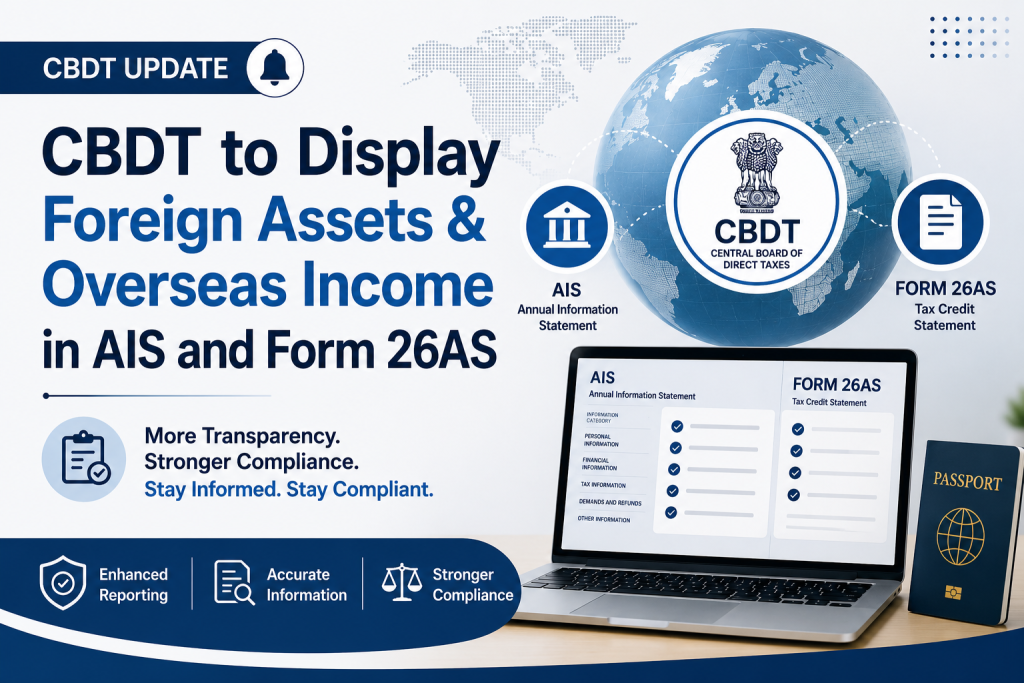
CBDT to Display Foreign Assets & Overseas Income in AIS and Form 26AS On 8 July 2026, the Central Board of Direct Taxes (CBDT) issued a landmark directive (Order F.No.…
ITR-1 vs ITR-2 vs ITR-4 for AY 2026-27: How to Choose the Right Income Tax Return Form Filing your Income Tax Return (ITR) begins with one critical decision—selecting the correct…
Who Qualifies as a Relative Under the Income-tax Act, 1961? The term "relative" may appear straightforward, but under the Income-tax Act, 1961, it does not have a single universal definition.…