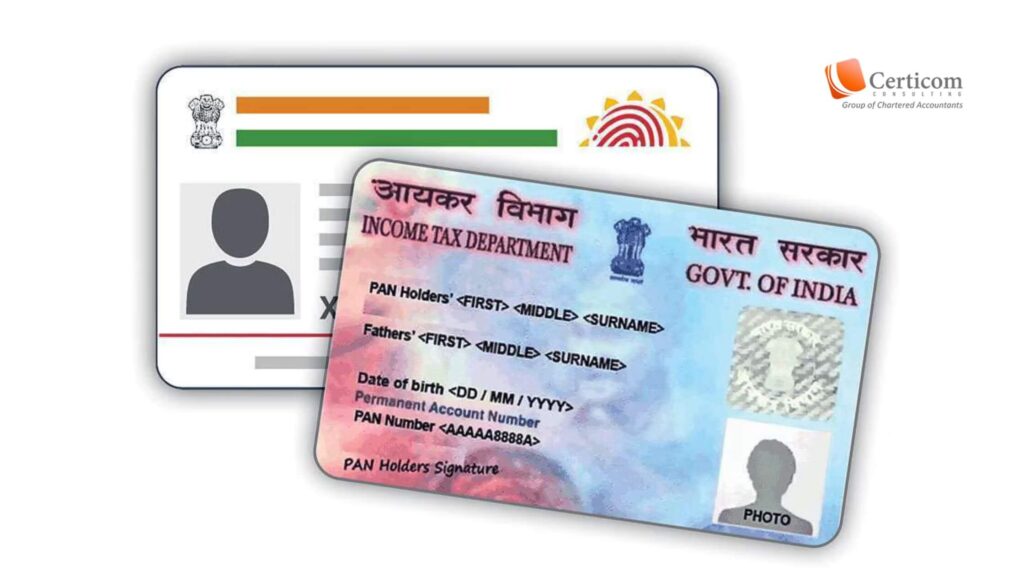
Aadhaar OTP a Must for PAN Registration: New Income Tax Portal Rule

PAN

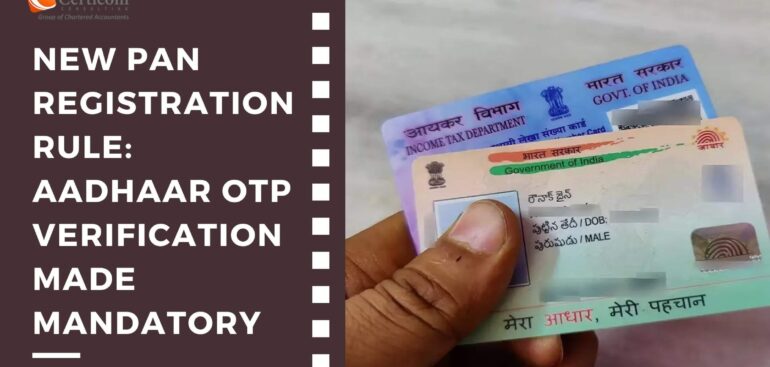
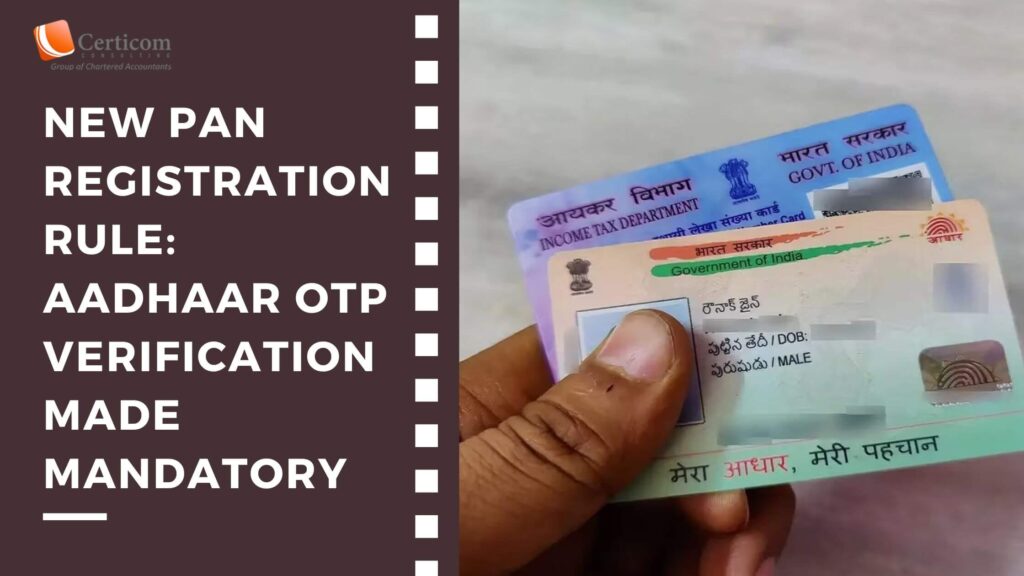
New PAN Registration Rule: Aadhaar OTP Verification Made Mandatory

PAN

In a significant update, the Income Tax Department has introduced a mandatory Aadhaar-based OTP verification step for individuals registering their Permanent Account Number (PAN) on the official e-filing portal — www.incometax.gov.in.

This change is designed to enhance security and ensure that only genuine users are able to initiate the PAN registration process. Here’s everything you need to know about the new process and what it means for taxpayers.

What’s New in PAN Registration?

As part of the updated registration process, individuals must now:

  • Consent to Aadhaar Authentication: During registration, users must allow validation through the UIDAI (Unique Identification Authority of India) database.

  • Verify via Aadhaar OTP: A One-Time Password (OTP) will be sent to the mobile number linked with the applicant’s Aadhaar. This OTP must be entered to complete the registration.

Without completing this Aadhaar OTP authentication, the PAN registration process on the Income Tax Department portal cannot proceed.

PAN

Why Aadhaar OTP Verification Is Crucial

The mandatory Aadhaar OTP step serves multiple purposes:

  • Enhanced Identity Verification: Helps prevent fraudulent or duplicate PAN registrations.

  • Faster PAN-Aadhaar Linking: Simplifies the integration process as required by law.

  • Legal Compliance: Under Section 139AA of the Income Tax Act, linking PAN with Aadhaar is a legal necessity.

What Should Taxpayers Do?

To ensure a hassle-free PAN registration process:

  1. Check Your Aadhaar-Mobile Link: Make sure your Aadhaar is linked to an active mobile number.

  2. Update If Needed: If your Aadhaar is not linked with a mobile number, visit the nearest Aadhaar Seva Kendra to update your contact details.

  3. Be Ready for OTP: Once linked, keep your mobile device handy to receive and enter the OTP during PAN registration.

The mandatory Aadhaar OTP verification adds an essential layer of security and aligns with the government’s broader digital authentication goals. For individuals looking to register their PAN online, ensuring a valid Aadhaar-linked mobile number is now the first and most critical step.

Related Post

image

GST Refund Filing Overhaul: Annexure-B Utility Mandatory from May 18, 2026

GST Refund Filing Overhaul: Annexure-B Utility Mandatory from May 18, 2026 The Goods and Services Tax Network (GSTN) has introduced a significant procedural shift in the GST refund filing mechanism.…

image

All About Exempted Income and Deductions Under the New Income Tax Act, 2025

All About Exempted Income and Deductions Under the New Income Tax Act, 2025 India’s taxation framework has entered a new era with the introduction of the Income Tax Act, 2025.…
image

Clause 43 in Tax Audit Report: Why a Single Wrong Entry in Part-D of Form 145 Can Invite Department Scrutiny

Clause 43 in Tax Audit Report: Why a Single Wrong Entry in Part-D of Form 145 Can Invite Department Scrutiny With the introduction of the new Income Tax Rules, 2026,…


Book A One To One Consultation Now
For FREE

How can we help? *

Income Tax Benefits for Senior Citizens: What You Can Claim in AY 2025-26

Senior Citizens

Income Tax Benefits for Senior Citizens: What You Can Claim in AY 2025-26

Senior Citizens

As the Income Tax Return (ITR) filing season for Assessment Year 2025-26 begins, many taxpayers—especially senior citizens—are evaluating the deductions and exemptions they are entitled to. The Income Tax Act provides several tax concessions for senior and super senior citizens to ease their financial burden and simplify compliance.

Who is a Senior Citizen under the Income Tax Act?

  • A Senior Citizen is an individual aged 60 years or above but less than 80 years at any time during the financial year.

  • A Super Senior Citizen is someone aged 80 years or above.

1. Higher Basic Exemption Limit

One of the most significant benefits for senior citizens is the enhanced exemption threshold under the Old Tax Regime:

  • Senior Citizens (60–79 years): ₹3 lakh

  • Super Senior Citizens (80 years & above): ₹5 lakh
    In contrast, the exemption limit for individuals below 60 years is ₹2.5 lakh.

This means income up to these thresholds is completely tax-free, helping reduce the tax liability substantially.

2. Deduction on Medical Insurance Premium – Section 80D

Senior citizens can claim a higher deduction of up to ₹50,000 under Section 80D for:

  • Medical insurance premiums, or

  • Medical expenditure (if no insurance is taken)

This is notably higher than the ₹25,000 limit available to taxpayers below 60.

3. Deduction for Treatment of Specified Diseases – Section 80DDB

If a senior citizen incurs medical expenses for specified critical illnesses (like cancer, Parkinson’s, chronic renal failure, etc.), they can claim up to:

  • ₹1,00,000 as deduction under Section 80DDB
    For non-senior citizens, this limit is restricted to ₹40,000.

4. Deduction on Interest Income – Section 80TTB

Senior and super senior citizens are allowed to claim a deduction of up to ₹50,000 on interest income earned from:

  • Savings accounts

  • Fixed deposits (FDs)

  • Recurring deposits (RDs)
    in banks, co-operative banks, and post offices.

This benefit under Section 80TTB is exclusive to senior citizens and replaces the earlier Section 80TTA deduction of ₹10,000 available to other individuals.

5. Exemption from Advance Tax

Senior citizens who do not have income from business or profession are exempt from paying advance tax. They can simply pay self-assessment tax before filing their return, reducing compliance hassles.

6. Relief from ITR Filing – Section 194P

Introduced in Budget 2021, Section 194P provides relief to resident senior citizens aged 75 years or above who:

  • Have only pension and interest income (from the same bank)

  • Furnish a declaration to the bank

In such cases, the bank deducts applicable tax, and the individual is not required to file an ITR.

Senior citizens enjoy a host of benefits under the Income Tax regime to ease their compliance and reduce their tax burden. Whether it’s higher exemption limits, better medical-related deductions, or simplified filing processes, these provisions are designed to offer financial support in the later stages of life.

As the ITR filing deadline approaches, senior taxpayers should evaluate which regime suits them better (Old vs New) and make full use of available deductions to optimise their tax liability.

Related Post

image

GST Refund Filing Overhaul: Annexure-B Utility Mandatory from May 18, 2026

GST Refund Filing Overhaul: Annexure-B Utility Mandatory from May 18, 2026 The Goods and Services Tax Network (GSTN) has introduced a significant procedural shift in the GST refund filing mechanism.…
image

All About Exempted Income and Deductions Under the New Income Tax Act, 2025

All About Exempted Income and Deductions Under the New Income Tax Act, 2025 India’s taxation framework has entered a new era with the introduction of the Income Tax Act, 2025.…
image

Clause 43 in Tax Audit Report: Why a Single Wrong Entry in Part-D of Form 145 Can Invite Department Scrutiny

Clause 43 in Tax Audit Report: Why a Single Wrong Entry in Part-D of Form 145 Can Invite Department Scrutiny With the introduction of the new Income Tax Rules, 2026,…

Book A One To One Consultation Now
For FREE

How can we help? *

Claiming Input Tax Credit (ITC) under GST: Essential Documents and Compliance Checklist

Input Tax Credit

Claiming Input Tax Credit (ITC) under GST: Essential Documents and Compliance Checklist

Input Tax Credit

Input Tax Credit (ITC) is a cornerstone of India’s Goods and Services Tax (GST) regime. It enables registered businesses to offset the tax paid on purchases and business-related expenses against their GST liability on outward supplies. However, ITC is not an automatic benefit—it is subject to stringent conditions and documentation requirements.

1. Mandatory Conditions for Availing ITC

Under Section 16 of the CGST Act, 2017, a registered taxpayer, including an Input Service Distributor (ISD), can claim ITC only when all the following conditions are met:

a) Possession of Valid Tax Invoice or Debit Note

The taxpayer must possess a valid tax invoice or debit note issued by a registered supplier. The document should meet all GST compliance norms, including:

  • Supplier’s name, address, and GSTIN

  • Invoice number and date

  • Recipient’s name, address, and GSTIN (if registered)

  • HSN/SAC code for goods/services

  • Description, quantity, and value of goods/services

  • GST amount charged (CGST/SGST/IGST)

Note: Invoices that are incorrect, missing, or mismatched may lead to ITC denial or reversal.

Input Tax Credit

b) Actual Receipt of Goods or Services

As per Section 16(2)(b), ITC can be claimed only when the goods or services have been received. In case of partial delivery or goods received in installments, ITC is allowed only after the last lot is delivered.

c) Tax Must Be Paid to the Government

According to Section 16(2)(c), the supplier must have paid the GST amount to the government, either:

  • In cash, or

  • By utilizing their available input tax credit under Section 41

This ensures that ITC is supported by actual tax remittance.

Important Update – Section 16(2)(aa):

Introduced via the Finance Act, 2021 and effective from January 1, 2022, this section mandates that ITC can be availed only if:

  • The supplier has reported the invoice in GSTR-1, and

  • The invoice appears in the recipient’s GSTR-2B

This provision tightens ITC eligibility by linking it directly to supplier compliance.

d) Timely Filing of GST Returns

Per Section 16(2)(d), the recipient must have filed valid returns under Section 39 (GSTR-3B). ITC cannot be claimed unless the return for the relevant tax period has been filed.

2. Acceptable Documents for Claiming ITC

Rule 36 of the CGST Rules, 2017 outlines the list of acceptable documents for claiming ITC:

  • Tax Invoice issued under Section 31

  • Debit Note from the supplier

  • Bill of Entry or similar customs documents for imports

  • Invoice issued by ISD for distributed input services

  • Invoice or Credit Note issued by the recipient under reverse charge

Clarification – Circular No. 123/42/2019-GST

Minor discrepancies in invoice details (like address or HSN code) will not result in ITC denial, provided that:

  • The GSTIN, invoice number, and tax amount are correct

  • The transaction’s genuineness is not in doubt

Input Tax Credit

3. Time Limit for Claiming ITC

As per Section 16(4) of the CGST Act (amended by the Finance Act, 2022), ITC must be claimed before the earlier of:

  • 30th November of the following financial year, or

  • The date of filing the annual return (GSTR-9)

This change extends the previous deadline (which was the due date of the September return) and offers businesses a slightly wider window for reconciliation.

Read More: Monthly GST Filing Mastery: Streamlining Compliance for Bangalore Businesses

Conclusion

To safeguard ITC eligibility and avoid reversal or penalties, businesses should adopt the following best practices:

✅ Maintain GST-compliant invoices and debit notes
✅ Ensure suppliers have filed GSTR-1 and paid the GST
✅ Reconcile purchase data with GSTR-2B regularly
✅ File accurate and timely GSTR-3B returns

Proper documentation and diligent compliance are essential to fully benefit from Input Tax Credit under GST. Any lapse could result in denial of credit, interest liabilities, and penalties—making ITC management a high-priority area in GST compliance.

Related Post

image

GST Refund Filing Overhaul: Annexure-B Utility Mandatory from May 18, 2026

GST Refund Filing Overhaul: Annexure-B Utility Mandatory from May 18, 2026 The Goods and Services Tax Network (GSTN) has introduced a significant procedural shift in the GST refund filing mechanism.…
image

All About Exempted Income and Deductions Under the New Income Tax Act, 2025

All About Exempted Income and Deductions Under the New Income Tax Act, 2025 India’s taxation framework has entered a new era with the introduction of the Income Tax Act, 2025.…
image

Clause 43 in Tax Audit Report: Why a Single Wrong Entry in Part-D of Form 145 Can Invite Department Scrutiny

Clause 43 in Tax Audit Report: Why a Single Wrong Entry in Part-D of Form 145 Can Invite Department Scrutiny With the introduction of the new Income Tax Rules, 2026,…

Book A One To One Consultation Now
For FREE

How can we help? *